
Torah-ship is Discipleship

Torah-ship is Discipleship

It obvious within Christianity that the attempted removal or cover-up of the Torah (The Law) has led to some pretty serious problems that often seem irreversible, that is until Yeshua returns to establish His kingdom on earth. All of us associate our ‘religion’ from a vantage point of life experiences mixed with ideology. The majority of Christianity and its various denominations know very little about the Torah or even more so “keeping the Torah”. The church has been sacked with centuries of teachings guiding people away from keeping the Torah and anything remotely Jewish.

This issue is not new in church history; it has been occurring since the days of the apostles. If you read our last post, “The Venerable Day of the Sun or Sabbath,” you gained some insight into this topic. I’ll include a link at the bottom if you’re interested in learning more.

If you have studied church history, you’ve likely encountered times when religious leaders were the only ones who had access to the scriptures, and most common people could not even read them if they wanted to. This created a “believe what we tell you” scenario.

One significant error that arose from this situation was the sale of indulgences by the Roman Catholic Church, which promised to keep one’s deceased relatives out of purgatory. This practice was absurd, ridiculous, and downright dishonest. So why did common people participate in it? Because they didn’t know the scriptures; they only knew what the Church told them.

The shocking reality is that this is still happening today! We’ve all been affected by it. If you have left the church to start following the Torah, you know the challenges and mental hurdles you have had to overcome in your understanding of the scriptures. No matter how straightforward the words on the page may seem, our minds often drift back to what we were taught before. In fact, this phenomenon occurs within Torah circles as well. Many believers are more influenced by the latest teachings from YouTube than by what Moses, the Prophets, Yeshua, and the Apostles actually tell us. Here’s an example to illustrate what I mean:

The scriptures talk about = Inheriting the kingdom of God referring to the glorious future that awaits the people of God.

The scriptures do not talk about = going to heaven when you die.

This is why we must continually be in the Word allowing it to renew our minds. Let’s Begin.

What is Discipleship?

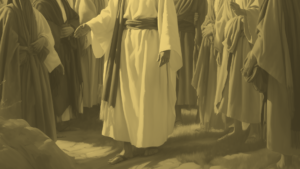
Discipleship was a well-established aspect of Israel’s culture. Being a disciple means you are a student of a teacher. The Hebrew word for ‘student’ is “Talmid.” Yeshua refers to this in Luke 6:40, where He states, “A taught one is not above his teacher, but everyone perfected shall be like his teacher.” This indicates that the Talmid (student) was to aspire to be like his teacher, even to the point of following him perfectly. Such a commitment would require great attention, discipline, and a continuous effort to learn from the teacher.

The essence of discipleship is imitation. As good students, we are to imitate our teacher. In the time of the Master, a disciple served as an apprentice to a Torah teacher. This approach was the primary method of religious education during that era.

But whoever guards His Word, truly the love of Elohim has been perfected in him. By this we know that we are in Him. The one who says he stays in Him ought himself also to walk, even as He walked.

Our calling as being disciples of Yeshua is to ‘Shema’ (Hear and Obey). We are to reflect our teacher in everything that we do.

"Therefore everyone who hears these words of Mine, and does them, shall be like a wise man who built his house on the rock.” Matthew 7:24

The Four Jobs of a Disciple

In the first century, the disciples of the sages were entrusted with four essential tasks that shaped their teachings and influence.

1. To memorize their teacher’s words. – The respected rabbis and Torah scholars did not rely on scrolls or books for education. Instead, they taught orally, encouraging their disciples to memorize their teachings. Through diligent repetition, the students internalized this wisdom, ensuring it was preserved and passed down through generations.

2. To learn their teacher’s traditions and interpretations. – It was the disciple’s responsibility to learn how their teacher observed God’s commands and interpreted the Scriptures. Every detail about the teacher was significant to the disciple. They needed to understand how the teacher observed the Sabbath, fasted, prayed, gave to charity, recited blessings over food, and more. Additionally, the disciple focused on how the teacher interpreted various passages of Scripture.

Mount of Olives - Salt of the Earth Ministries


3. To imitate their teacher’s actions. – A disciple’s mission is to reflect their teacher, aiming to become a true likeness of their Master. Through diligent study, a disciple learns to act, speak, and respond in the same way as their Master. This concept is effectively expressed in the gospels: “Every disciple, fully trained, will be like his teacher.” (Luke 6:40)

4. To raise up disciples. – After completing their training, it was the disciple’s job to raise their own disciples. This would equip the next generation to walk as their teacher did. When he left them, he gave them this command;

Therefore, go and make taught ones of all the nations, immersing them in the Name of the Father and of the Son and of the Set-apart Spirit, teaching them to guard all that I have commanded you. And see, I am with you always, until the end of the age.” Amen.

The great commission is the normal job of a disciple, to raise up more disciples.

Taking on the Yoke

Come to Me, all you who labor and are burdened, and I shall give you rest. “Take My yoke upon you and learn from Me, for I am meek and humble in heart, and you shall find rest for your beings “For My yoke is gentle and My burden is light.” Matthew 11:28-30

The yoke that Yeshua referred to is the Torah. This was not a new concept during the time of the Master. When Yeshua says, “Take My yoke upon you and learn from Me,” He is speaking about the Yoke of discipleship. We are called to walk in His ways. It is not about adopting a theological mindset of “I’m a Christian,” as if mere membership in a church will grant us entry into the Kingdom. The idea that He fulfilled the Torah so that we don’t have to is contrary to the religious beliefs that existed in Yeshua’s time and goes against the scriptures. This leads us back to the importance of believing what the scriptures truly say, rather than filtering them through what we have been told.

Cheap-Grace Discipleship

Much of what we see today within ‘Christianity’ and the church is cheap grace. Quoting from Bonhoeffer’s ‘The Cost of Discipleship’. “Cheap grace is the preaching of forgiveness without requiring repentance, baptism without church discipline, communion without confession, absolution without personal confession. Cheap grace is grace without discipleship, grace without the cross.”

Many people believe that simply identifying as a believer or even thinking of themselves as such means they are true followers of the Messiah and will reach heaven after they die. However, most are not willing to embrace the responsibilities of discipleship. They have been influenced by the world around them, and their understanding is limited. Let those who can hear, listen!

We have been influenced by religious teachings to believe that engaging in a yoke of physical works is a form of legalism. Believers often proclaim, “It’s not by works, but by faith!” However, we see that Abraham first believed (faith) and then followed the Father’s instructions by circumcising himself and the males in his household (action). Our faith is not the end point; rather, it is the starting point of our journey.

My brothers, what use is it for anyone to say he has belief but does not have works? This belief is unable to save him.

According to James, your belief is unable to save you. This mind theology that has overtaken the Christian world is really part of the spiritual new age movement. It’s not in the scriptures and it’s a demonic theology that is leading millions astray. “Few that find it”.

It’s also interesting that the book of Revelation also addresses our works.

And I saw the dead, small and great, standing before the throne, and books were opened. And another book was opened, which is the Book of Life. And the dead were judged from what was written in the books, according to their works. And the sea gave up the dead who were in it, and Death and She’ol gave up the dead who were in them. And they were judged, each one according to his works.

When the Book of Life is opened, we will be judged by our actions, not by our beliefs. Your theology, denomination, mega pastor, or YouTube teachers will not save you!

We aspire to the eternal reward that Yeshua earned for us, yet we often mistakenly believe we can attain it without following His teachings. We must remember the fundamental call of the gospel: “Repent” (Matthew 4:17). True salvation comes through genuine repentance and a commitment to His way.

A Call to Action

The call to action is for every individual. Are we urging the entire body of believers to repent and turn from their ways? Absolutely! However, this transformation begins with each of us. It’s a call to start walking in the fullness of the Messiah and to put our love into action.

How do we display our love? According to Yeshua in John 14:15, He said, “If you love me, keep my commandments.” This is a physical action that requires all of us to do something. It’s time to move beyond the “Christian” notion of merely being spiritual people. Yes, we are to walk in the Spirit and live in the Spirit, but the scriptures never instruct us to be spiritual or to act spiritual. Instead, they tell us to be scriptural.

We must recognize the difference between these two concepts. You cannot walk in the Spirit if you are not keeping the commandments.

It’s important to note that Yeshua did not say, “If you love me, keep the Ten Commandments.” The commandments He was referring to were those of the Torah (The Law). If you are new to walking in the Torah, I want to clarify that you, as an individual, are not required to keep all 613 commandments. Some laws are meant for priests, some are for men, some are for women, and others pertain to the sacrificial system, among other distinctions. Many of these laws are not applicable in our world today for various reasons, but let’s remain focused.

Many people, churches, and denominations claim that we are only required to keep the Ten Commandments, but you will not find this doctrine in the scriptures. In the days of the master, no such doctrine existed. There were Jews and God-fearing Gentiles who actively followed the Torah. We must remember that Yeshua said, “My yoke is easy.” While there is some learning and unlearning for all of us, walking in His ways is not difficult; rather, it is a blessing!

This call to action requires us to understand our responsibility to Shema, which means “Hear & Obey.” What hangs in the balance is the kingdom. We cannot allow our pride and our flesh to hinder our ability to attain the kingdom for the sake of this world. We must be in the world but not of it. This is a call to embrace the fruits of the Spirit and to deny the works of the flesh. It is crucial that we protect and, as Yeshua Himself said, “guard” His commandments.

Guarding the Commandments

Let’s define what ‘Guard’ means:

Guard:

  1. Watch over in order to protect or control.

  2. Protect against damage or harm.

  3. A person who keeps watch, especially a soldier or other person formally assigned to protect a person or to control access to a place.

  4. A device worn or fitted to prevent injury or damage.

The Commandments - Salt of the Earth Ministries

The Hebrew word for guard is “Shemar” which means to take great care of something.

The commandments are not something we can pickup one day and lay down the next. Also, every time we fail to keep them, we pull out the old grace card and say He understands. In reality, He does understand and He knows the struggles of the flesh. Are we going to break the commandments unintentionally? Yes it’s inevitable because we are flesh. The question we must ask ourselves it what is the attitude of our heart concerning the commandments? Do you genuinely desire to keep them?

Some people may adopt a mindset of displacement, thinking, “I’m not going to worry about that one” or “That rule is for someone else.” Others might take an “out of sight, out of mind” approach. However, the Greek and Hebrew meanings of the word “guard” indicate that we should do more than just keep the commandments; we are to actively watch over them and take great care in following them. This should be our attitude towards the commandments: we must take ownership as stewards of the vineyard. We should oversee these teachings in our lives and strive to bear fruit in accordance with repentance, as John the Baptist would say.

Building Walls in Your Life

In the book of Nehemiah, we learn about the destruction of the walls of Jerusalem and the fallen gates. The Babylonians besieged the city, leaving the walls in ruins for over 100 years and exposing the city to danger. A delegation from Jerusalem entrusted Nehemiah with the task of rebuilding the walls, which he accomplished in just 52 days.

These walls provided fortification and protection against enemies, creating a barrier between Jerusalem and the outside world. Essentially, if there are no walls, there is no city, and no city means no walls. The two are interdependent: you cannot have a house without walls, just as you cannot have walls without a house.

Similarly, the walls we need to build in our lives serve to ‘guard’ the commandments we are meant to follow. These walls protect us from negative influences and the challenges of the surrounding world.

I recently came across an article by Jacob Fronczak from FFOZ and he made the below statement which I thought I was refreshing and challenging.

If our churches really understood the gravity of our mission—if we all understood what was at stake and what Jesus and Paul were trying to accomplish—we would take the Torah seriously. We would create communities that make it hard to sin. We’d have accountability at every level, from top-level leadership to the newest disciple. The rules would be enforced as rigorously as they were in the days of the apostles.

Fronzak’s statement “We would create communities that make it hard to sin” really stuck in my mind and led me to think through why is this such a struggle for believers? My initial thoughts went to two reasons.

  1. Influence from the ‘Christian’ church has been miss-guided since the first and second century.

  2. Influence from the world around us. We should be influencing the world and instead the world has sadly influenced the church.

However, we as believers should make sinning difficult. We sin when we are lead astray by our flesh and our fleshly desires. We fan the flames of this fire by the things we allow into our lives and our homes. As we have mentioned in past post we often forsake holiness and righteousness for worldly lust and entertainment. Discipleship is a call for every disciple of Messiah to sanctify their lives in everything that they do. Sanctification does not mean ‘Christian’ and Christian does not mean ‘Sanctification’. It takes us back to the ‘WWJD’ days and requires us to take inventory and ask “What would Yeshua do?”

Sanctify Your Life

Are the things your watching sanctified according to the Word? Are the things your partaking in sanctified by the Word of Yah? What about the places you go, the people you associate with, what you see on your social media channels, even the food you eat. Is your life as a disciple sanctified in the Word of Yah?

The disciples call is to ‘guard’ the commandments. For a believer the commandments are not some external third-party application that we integrate into our lives. The commandments of YHWH is life, it’s the life of a believer. Don’t create new commandments, as to not add or take away from the scriptures, but erect guard rails in your life to keep you from going off the road into sin. This should be common sense to a believer, but sadly it’s not. Christianity is drenched in the Greek culture and mindset. Where as the Hebrew thought is a real thing, something tangible, something to take action on. The Greek will ‘think’ his way through life like a philosopher. Guess what my friends, you can ‘think’ your way right out of the kingdom, even if you claim to be a believer in Messiah!

Paul tells us in 1st Corinthians 6:9

Do you not know that the unrighteous will not inherit the kingdom of God? Do not be deceived”

This indicates that we can be deceived and if you think that you are not deceivable, then your pride has blinded your eyes.

We as disciples of Yeshua, must sanctify our lives and represent what is in the scriptures. We cannot allow sin, entertainment, the pride of life, the lust of the flesh, to lead us astray.

I will leave us with the words that Paul wrote to Timothy.

Pay attention to yourself and to the teaching. Continue in them, for in doing this you shall save both yourself and those who hear you.

Pay attention (guard) yourself and to the teaching (Torah). Continue in them and save yourself and those who hear you.

The Venerable Day of The Sun or Sabbath

Stay Salty!
The Didache - The Early Church's Ancient Teaching

The Didache – The Early Church’s Ancient Teaching

The Didache, also known as “The Teaching of the Twelve Apostles,” stands as one of the earliest and most mysterious documents in the history of the early church. Its text, shorter in length yet far reaching in impact, offers a window into the beliefs, observances, and community halakha of the earliest followers of Yahshua.

Read More »
City Skyline

The Great Battle

The goal of this fallen world is the same as that faithful day in the garden. The alure and attraction of this world pulls believers and unbelievers alike into its grips through wealth, status, friends, religion, ETC. The enemy’s plan has not changed since the garden; he’s only become stealthier and more deceitful. The battle that started has only become more intense and with an enemy harder to target. The Word warns us not to become like the world, but to imitate our Messiah and to walk in the spirit which is full of life and peace.

Read More »
Our Way or Yah's Way

Our Way or Yah’s Way

Much like Moses, you may find yourself feeling discouraged, confused, and questioning where Yah is in your life. We all experience these moments, and often, the most heartfelt prayers come when we feel completely empty and simply ask for help. It’s in these times of humility, when we realize that there is nothing we can do on our own, that we must fully depend on and trust Him.

Read More »

If this ministry has blessed you, please consider donating HERE

“You are the salt of the earth, but if the salt becomes tasteless, how shall it be seasoned? For it is no longer of any use but to be thrown out and to be trodden down by men.”

Copyright 2025 Salt of The Earth Ministries